How Thermal Drone Data Helps Identify Roofing Energy Gaps
- Dania Akram
- Apr 27
- 4 min read

Have you ever noticed a room that feels warmer or colder than the rest of the house—no matter how much you adjust the thermostat?
In many cases, the issue isn’t the HVAC system. It’s the roof.
Energy loss through roofing systems is one of the most overlooked causes of indoor temperature imbalance. Small insulation gaps, hidden moisture, or damaged roofing layers can allow heat to escape in winter or enter during summer—quietly increasing energy bills over time.
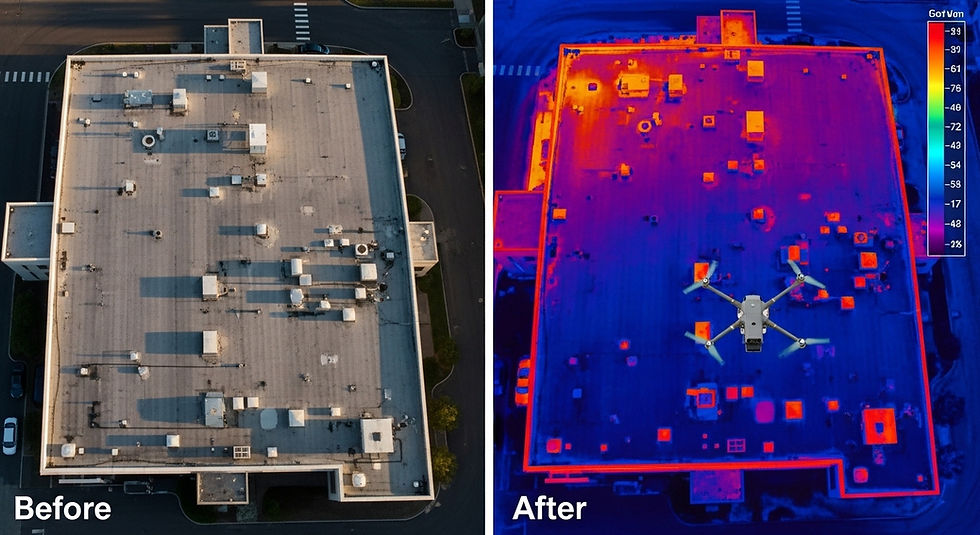
Today, drone thermal roof inspection methods are helping property owners detect these hidden energy gaps by analyzing temperature patterns across the roof. Instead of guessing where energy loss might be happening, thermal drone data provides visual, measurable insights into how a roof is performing.

What Are Roofing Energy Gaps?
Roofing energy gaps refer to areas in a roof where insulation or structural integrity is compromised, allowing heat to transfer more easily between the interior and exterior of a building.
In simple terms, these are weak points where energy escapes.
They are often caused by:
Damaged or compressed insulation
Moisture intrusion affecting thermal performance
Gaps in roofing materials or seams
Aging roof systems losing efficiency
Poor installation or repair work
Because these issues are not always visible, they can remain undetected while steadily increasing heating and cooling costs.
Why Energy Loss Through the Roof Matters
The roof plays a major role in regulating indoor temperature. When it is functioning properly, it helps maintain a stable thermal barrier between the building and the outside environment.
When energy gaps exist, the building must compensate.
This leads to:
Increased energy consumption
Higher utility bills
Uneven indoor temperatures
Greater strain on HVAC systems
Reduced overall energy efficiency
Even small inefficiencies can add up over time, especially in larger residential or commercial properties.
Identifying these gaps early can significantly improve energy performance.
What Is a Drone Thermal Roof Inspection?
A drone thermal roof inspection is a process that uses drones equipped with infrared cameras to detect temperature differences across a roof surface.
These cameras capture heat patterns that are invisible to the human eye.
Instead of only relying on visible imagery, thermal inspections reveal how heat is moving through the roof system.
This allows inspectors to identify:
Areas where heat is escaping
Sections absorbing excess heat
Insulation inconsistencies
Moisture-related thermal changes
When combined with standard drone roof inspection imagery, thermal data provides a more complete picture of both structural and energy-related roof conditions.
How Thermal Drone Data Identifies Energy Gaps
Thermal imaging works by detecting variations in surface temperature.
A well-insulated roof typically shows a consistent temperature pattern. But when insulation is damaged or moisture is present, certain areas behave differently.
Here’s how thermal drone data helps identify energy gaps:
1. Detecting Heat Loss Zones: During cooler conditions, areas losing heat from inside the building may appear warmer on thermal images.
2. Identifying Heat Gain Areas: In warmer weather, poorly insulated sections may absorb and retain more heat than surrounding areas.
3. Revealing Moisture-Affected Insulation: Wet insulation changes thermal behavior, often appearing as irregular temperature patches.
4. Highlighting Air Leakage Points: Gaps or cracks can allow air to move through the roof system, creating noticeable thermal inconsistencies.
These insights help pinpoint where energy inefficiencies are occurring—even when there are no visible signs of damage.
Why Traditional Inspections May Miss Energy Inefficiencies
A standard roof inspection focuses on visible structural issues such as cracks, missing materials, or surface damage.
While important, this approach has limitations.
Traditional inspections typically do not reveal:
Subsurface insulation problems
Hidden moisture affecting thermal performance
Air leakage pathways
Early-stage energy inefficiencies
This is why roof inspection drones equipped with thermal sensors are becoming more valuable.
They allow inspectors to evaluate not just how the roof looks—but how it performs in terms of energy efficiency.
The Role of Thermal Data in Energy-Efficient Maintenance
Thermal drone data supports a more proactive approach to roof maintenance.
Instead of reacting to high energy bills or indoor discomfort, property owners can use inspection data to address inefficiencies early.
With a detailed drone inspection report, property owners can:
Locate specific areas of energy loss
Prioritize insulation repairs
Monitor roof performance over time
Plan upgrades based on actual data
This helps shift maintenance from reactive to preventive, reducing long-term costs.
How Drone Technology Improves Inspection Accuracy
Drones make thermal roof assessments more practical and consistent.
Using roof inspection drones, inspectors can scan entire roof surfaces quickly and systematically.
Key advantages include:
Comprehensive Coverage: Drones capture thermal data across the entire roof, including hard-to-reach areas.
Consistent Imaging Angles: Pre-planned flight paths ensure uniform data collection for accurate comparisons.
Reduced Human Error: Automated imaging reduces reliance on subjective judgment.
Safe Data Collection: Inspections can be performed without walking on the roof, minimizing risk.
This combination of efficiency and accuracy improves the reliability of energy gap detection.
Residential and Commercial Benefits of Identifying Energy Gaps
Thermal roof data is valuable across different property types.
For Residential Properties
A residential roof survey using thermal imaging can help homeowners:
Reduce heating and cooling costs
Improve indoor comfort
Detect hidden insulation issues
Plan energy-efficient upgrades
For Commercial Buildings
Larger properties benefit from drone roof surveys that identify widespread inefficiencies, helping facility managers:
Optimize energy performance
Reduce operational costs
Maintain consistent indoor environments
Extend roof system lifespan
In both cases, identifying energy gaps early leads to more efficient buildings.
Why Energy Gap Detection Is Becoming More Important
Energy efficiency is becoming a priority for property owners due to rising energy costs and increased awareness of building performance.
Roof systems play a central role in this equation.
By using aerial roof inspections combined with thermal analysis, property owners gain access to insights that were previously difficult to obtain.
This allows for:
Data-driven maintenance decisions
More efficient resource allocation
Improved building performance tracking
As buildings become more energy-conscious, understanding roof performance is no longer optional—it is essential.
Final Thoughts
Energy loss through a roof is often invisible, but its impact is measurable—in higher bills, reduced comfort, and long-term wear on building systems.
Drone thermal roof inspection methods provide a practical way to uncover these hidden energy gaps by analyzing how heat moves across the roof surface.
By identifying inefficiencies early, property owners can take targeted action to improve insulation performance, reduce energy waste, and maintain a more balanced indoor environment.
In a world where energy efficiency matters more than ever, thermal drone data offers a clearer view of how well a roof is truly performing.


Comments